In this article, there are no consumer signposts, no invitations to explore places. Just images of people and places, and what literature evokes.
English edition by Kathelijne Bonne.
Tabla de contenidos
Blurred senses in Japan
In the streets of Shinagawa the contrasts become clear. Elsewhere in Japan, they are never very obvious. Because everything seems attenuated. The cheese, although French, smells less. Salt is barely perceptible. Garlic does not sting. Onions don’t make you cry. The neighborhoods are no different.
I cross the train tracks to leave the elegant Takanawa behind, entering Shinagawa that looks more village-like. It is remarkable that office workers and skyscrapers coexist, and a bit further on, retirees gather to chat in narrow streets. It feels a bit more human. Garbage bags are still uncollected at noon. People are just waiting, hanging around, standing still on the sidewalk. An old man is doing some stretching. Boats lie in the canal.
I ‘ve bought a bike, because it’s the best way to explore Tokyo.

The Shinagawa canals
I look for water because among so many buildings, it sooths the senses . I look for the scent of the sea as well, but it’s barely noticeable. I hold on to it because, for some reason, I’ve been missing it.
Art and economy together
I stop my bike. I look for a place to park. It’s not easy because there are a lot of ‘no parking’ signs that no one obeys. I always watch what others are doing.
I end up in the elegant TV Harbor. Here everything looks like Puerto Madero in Buenos Aires, you can smell the real estate speculation. And where there is speculation, there is art. I can’t deny the beauty of the place. It is a good place to exercise and to visite with friends. It’s a beautiful place, crisscrossed by canals.
And one is encouraged to run because others run, and as the air passes across my face, I feel something close to happiness. I can’t explain it. Perhaps because I have not yet seen the dead as Olga Tokarczuk says in Flights. This is an unknown land for me. I have no past here. I don’t see strange shadows yet. I have the eyes of the child who discovers.
I cross the cannals. Food trucks fill up basements of offices. Office workers line up to buy bentos. I hesitate for a moment. But I decide to keep going. There are artists everywhere. The What Museum, the bridges that light up at night.
One always senses that all this calm and beauty are hiding something. The effort to build it all. The civilization, the respect for cyclists. The many signs in a language I don’t understand.
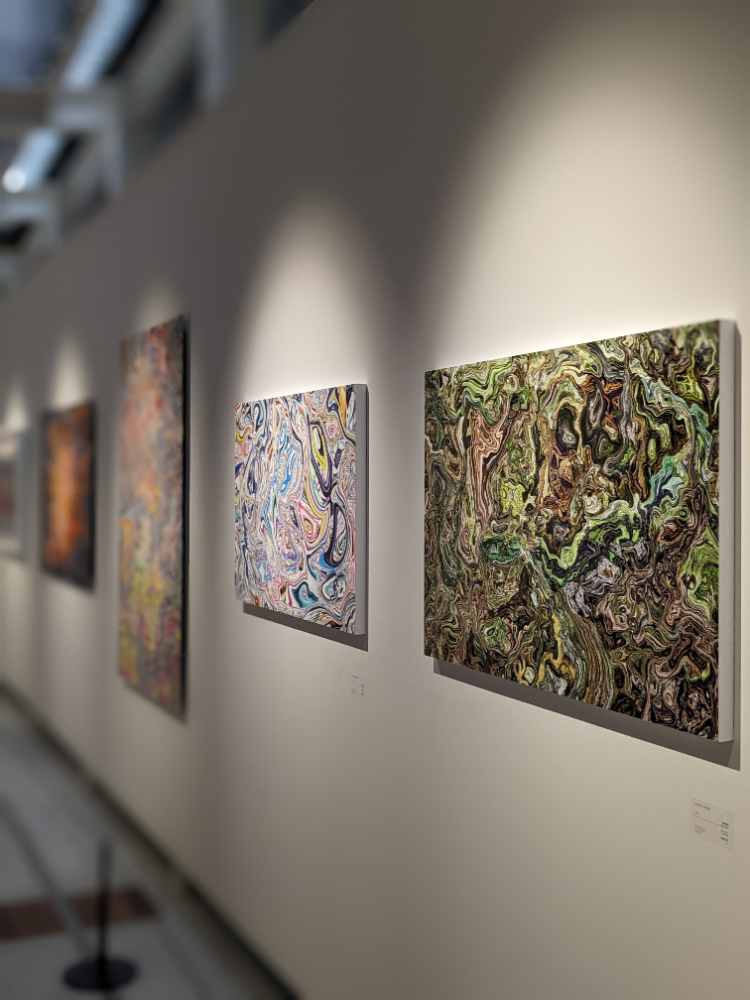
Beautiful art in the What Café.
Peace, above all
Keynes said that civilization is a fragile crust. How could Japan transform itself in such a short time? And I was reminded once again of The Buried Giant by Ishiguro Kazuo where a thick fog makes the population sink into oblivion after a war.
Paradoxically, this part of Tokyo, even though it is close to the bay, is never foggy. The skies are always clear.
There is a huge collective effort to sustain. A strong Leviathan. And one wonders if that Leviathan is just the state or is it also the corporations. The other day I was discussing with someone about whether the Japanese economy is liberal or statist. Who is the real Leviathan in Japan? Can the corporate world replace democratic mechanisms? Can it be a subtle way of substituting participation for hierarchy?
And following this premise, what role does art play in all this? Does it make things better? Does it soothe? Does it cloud our vision? Does it distract? A few kilometers away is the Mori Art Museum, in the Roppongi Hills. What role do these museums play in the urban configuration of these areas? I wonder if hierarchy and art are compatible and why they sometimes get along so well. I sense a strong, almost symbiotic relationship between art and economy, which I am keen on exploring further.
I continue my bike tour. The advantage of this means of transport is the speed. One can observe at an interesting pace. Stop if necessary. To watch people. The impeccable cars. The homeless. Those who silently support Gaza. The containers with merchandise. The shoe stores. The port. The pensioners eating in the street.
You know there is something in common. I see novelty. Different faces.
And at the same time something invariable.
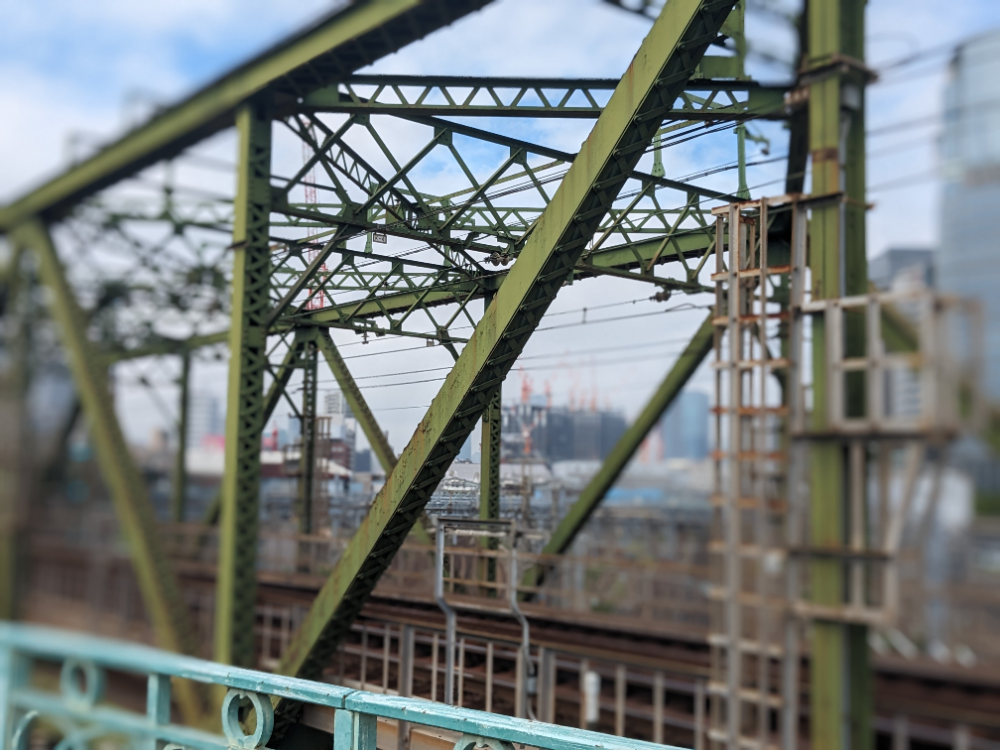
Railroad crossing
What we do here is done elsewhere. What is done now, is done in other times, says Chantal Maillard.
And suddenly, I hear a loud bang against the wall. Right where I park my bike. Two crows in a fight. I move away. Nature scares me. I admit they’re beautiful, but I’m creeped out by these birds. They slam into the wall without a second thought. Making that spine-chilling sound.
And off they go, still pecking at each other.

Deja una respuesta